ClearCube Technology releases TEMPEST Level-2 zero client for US State Department, CIA, FBI, Department of Energy, US foreign embassies, NATO locations, Ministries of Defense, and other security sensitive government agencies.
AUSTIN, TX – March 27, 2014 — All Media For Immediate Release
Designed to meet increasingly stringent security mandates for desktop computing devices, a TEMPEST Level-2 zero client is released by ClearCube Technology for US State Department, CIA, FBI, Department of Energy, US foreign embassies, NATO locations, Ministries of Defense, and other security sensitive government agencies.
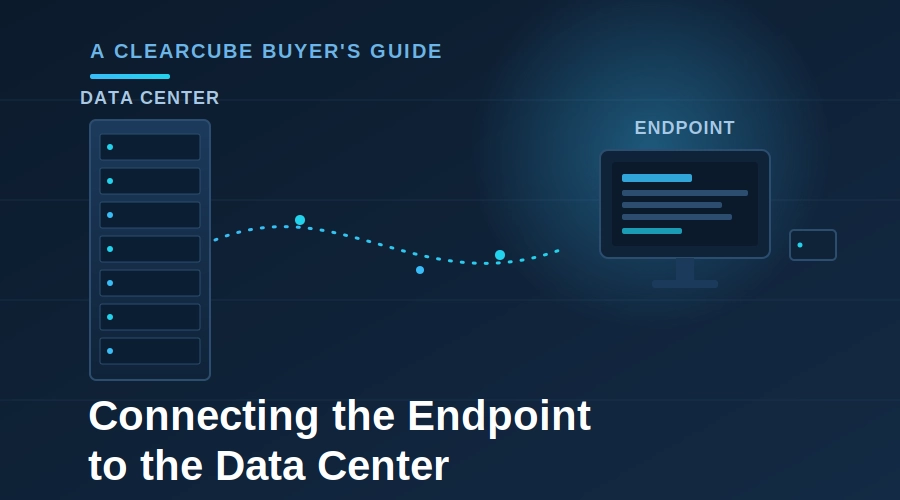
To provide TEMPEST PC buyers an alternative, ClearCube designed CD7724T-L2, a TEMPEST zero client stateless desktop device with no memory, no hard drive, and the simplest of electronics to remove the PC aspect completely out of the work area. Instead, CD7724T-L2 zero clients connect to Blade PCs located in the secure, locked down, climate-controlled datacenter.
“We believe TEMPEST Zero Clients deliver a much better alternative than TEMPEST PCs. Compare the complexities and costs for shielding and filtering a complete PC containing processor, memory and hard drive to that of a simple stateless zero client and you will see why zero clients make more sense for budget-conscious government entities,” said Jim Zakzeski, ClearCube VP, Sales and Marketing.
Zero clients, about the size of a paperback novel, are known throughout the industry as the most secure IP-based desktop platform available. Based on host-rendered PCoIP processing; only pixel transmissions/screen changes and USB redirection occur over the connection from zero clients to host resources such as Blade PCs or VDI virtual desktops. Data does not leave the data center and no processing is done at the desktop. In addition, PCoIP uses AES256/128 bit algorithms to encrypt the pixels.
Zero clients have connections for desktop peripherals such as TEMPEST certified monitors, mice, and keyboards (available in 7 languages), but all data remains on virtualized servers or Blade PCs in the datacenter.
“Customers with highly classified data that require TEMPEST IT equipment can now benefit from the operational cost-savings, increased security, higher availability, and better device management that desktop virtualization offers,” said Zakzeski.
The bundle of zero client, 24” display, keyboard, and mouse is developed, tested and certified at the ACS NSA certified facility to meet the following standards: USA NSTISSAM-1-92 Level 2 and NATO SDIP-27 Level B (formerly AMSG 788A). A second TEMPEST Level 2 certified display may be added to create dual display functionality.
CD7724T-L2 bundles are now available. Please contact ClearCube Sales at www.clearcube.com or 512) 652-3500 for more information.
No matter where you are in the buying process, let our team of highly knowledgable staff assist you in your journey.
You will be leaving ClearCube.com to visit our TAA accessories direct purchase shopping website. Please note, our Direct shopping website does not carry our core products (many of which are TAA Compliant). To view our core ClearCube products, close this window and go to our Products tab.